PILATES & UPPER CROSS SYNDROME
Learn about upper cross syndrome, its causes, and how Pilates can help address this postural imbalance. Discover specific exercises to strengthen weak muscles and stretch tight ones, improving posture and reducing injury risk.
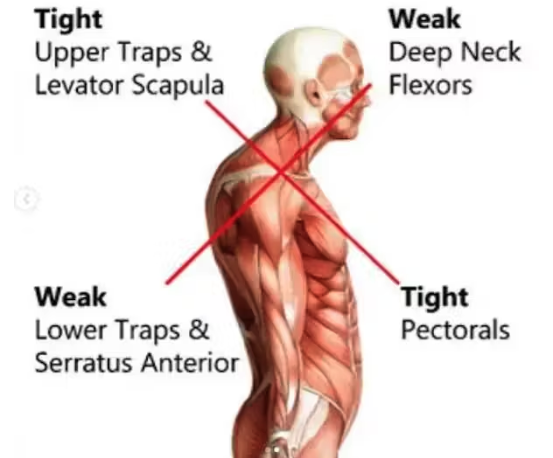
Upper cross syndrome, also known as "upper crossed syndrome," is a term used to describe a common pattern of muscle imbalances that can lead to poor posture and increased risk of injury. It is characterized by tight, overactive muscles in the upper back, neck, and shoulders, combined with weak, underactive muscles in the chest and front of the neck. This can cause the shoulders to round forward and the head to jut forward, leading to a hunched posture.
Pilates is a form of exercise that can be helpful in addressing upper cross syndrome by strengthening the weak, underactive muscles in the chest and front of the neck and stretching the tight, overactive muscles in the upper back, neck, and shoulders. Pilates exercises that focus on the chest and neck muscles, such as chest expansion and neck rolls, can help to improve posture and reduce the effects of upper cross syndrome. It is important to work with a trained Pilates instructor to ensure that you are performing the exercises correctly and to customize a Pilates program that is appropriate for your individual needs and goals.
In addition to chest expansion and neck rolls, there are other Pilates exercises that can be helpful in addressing upper cross syndrome. These may include:
- Scapular retraction: This exercise helps to strengthen the muscles in the upper back and improve posture. To perform scapular retraction, start by standing with your feet shoulder-width apart and your arms at your sides. Slowly squeeze your shoulder blades together, as if you were trying to touch them behind your back. Hold for a few seconds, then release.
- Chest lift: This exercise helps to strengthen the chest muscles and improve posture. To perform a chest lift, start by lying on your back with your knees bent and your arms by your sides. Lift your head, neck, and shoulders off the ground, keeping your arms straight. Hold for a few seconds, then release.
- Neck stretches: Stretching the neck muscles can help to alleviate tension and improve posture. To stretch the neck, try tilting your head to one side, then the other, and holding each position for a few seconds. You can also try tilting your head back and holding for a few seconds, or tilting your head forward and holding for a few seconds.
- Shoulder rolls: This exercise helps to stretch the muscles in the shoulders and upper back. To perform shoulder rolls, stand with your feet shoulder-width apart and your arms at your sides. Lift your shoulders up towards your ears, then roll them backwards in a circular motion. Continue rolling your shoulders backwards for a few repetitions, then reverse the direction and roll them forwards.
It is important to consult with a trained Pilates instructor to ensure that you are performing these exercises correctly and to customize a Pilates program that is appropriate for your individual needs and goals.
© Pilates Fitness 2025. All Rights Reserved